

How to Design a Show Home That Appeals to Your Target Audience
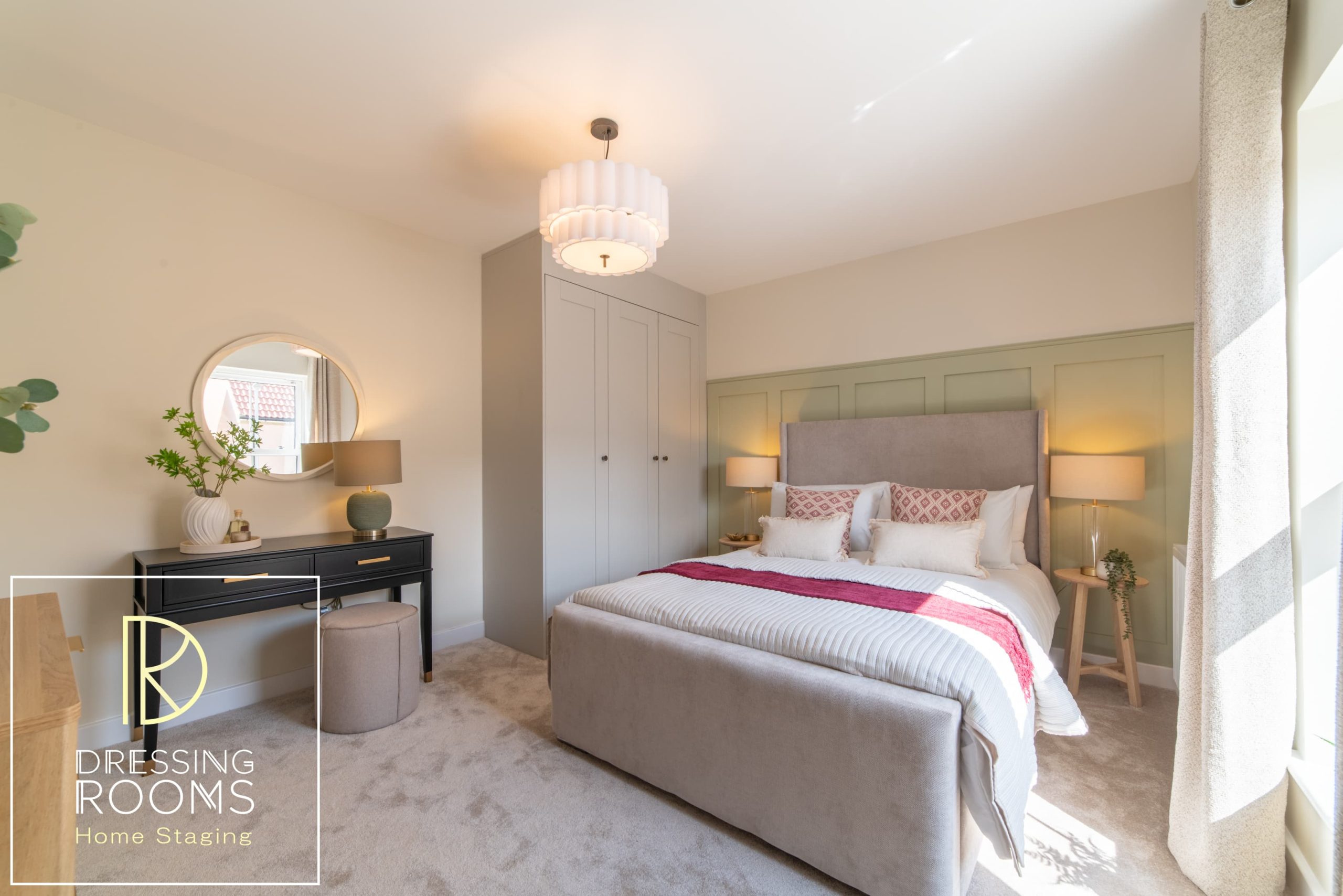
Designing a show home is about more than making a property look beautiful.
Yes, it needs to be aspirational. Yes, it needs to photograph well. And yes, you want potential buyers to walk through the front door and think, “Wow.”
But there is another question that is just as important:
“Can I actually see myself living here?”
We’ve seen some very memorable show homes over the years – and by memorable, I mean everything from blue walls and yellow ceilings to rooms completely filled with model aeroplanes!
While there is absolutely a place for bold and individual interior design, the problem with going too niche in a show home is that you risk making the show home memorable in all the wrong ways. There is no point in a buyer remembering your blue & yellow property for being something they hate!
When you’re selling multiple plots on a new development, your show home needs to do something slightly different. It needs to help as many of your target buyers as possible imagine their future life in the property.
That means designing a stylish show home that is made for your audience.
Start with your target buyer
Before doing anything, get really clear on who you are trying to attract.
Who is most likely to buy these homes?
Are you targeting:
• Young professionals?
• First-time buyers?
• Families with young children?
• Families with teenagers?
• Downsizers?
• Couples?
• Investors?
• Buyers looking for a second home?
The answer should influence your entire show home design.
For example, if you’re selling three-bedroom family homes, a beautifully styled office might look impressive, but perhaps a dedicated playroom or practical family dining area would suit the buyer better and therefore help them to create a stronger emotional connection with it.
Likewise, if you’re developing a block of apartments in an area popular with professional couples, creating a flexible home office might be more appropriate.
The key is to understand who is most likely to buy the property and what their life looks like.
What does your buyer actually want?
Once you’ve established who your audience is, think about what they need from their home.
This is where show home design becomes much more strategic.
A family with young children might be looking for somewhere that works for family meals, homework, toys and entertaining friends.
A couple working from home might immediately notice whether there is space for two desks.
A buyer with teenagers may be more interested in having a second reception room, a generous bedroom or somewhere they can escape to.
Try putting yourself in their shoes.
Imagine they have just walked through the front door. What would make them think:
“This house would work for us.”
Create a design brief – and stick to it
Once you know your audience and what they want, turn it into a simple design brief.
This becomes your template for every decision you make.
For example:
Target buyer: Young family
Lifestyle: Social, busy, works partly from home
Priorities: Family dining, home office, storage, entertaining space
Style: Modern, warm, sophisticated but practical
Now, when you’re choosing furniture, colours and accessories, you have something to refer back to.
Does this choice appeal to the target buyer?
Does it demonstrate how the space can be used?
Does it make the property feel aspirational while still achievable?
If the answer is yes, you’re on the right track.
This also helps prevent a show home from becoming a collection of individual rooms that look nice but don’t tell a coherent story.
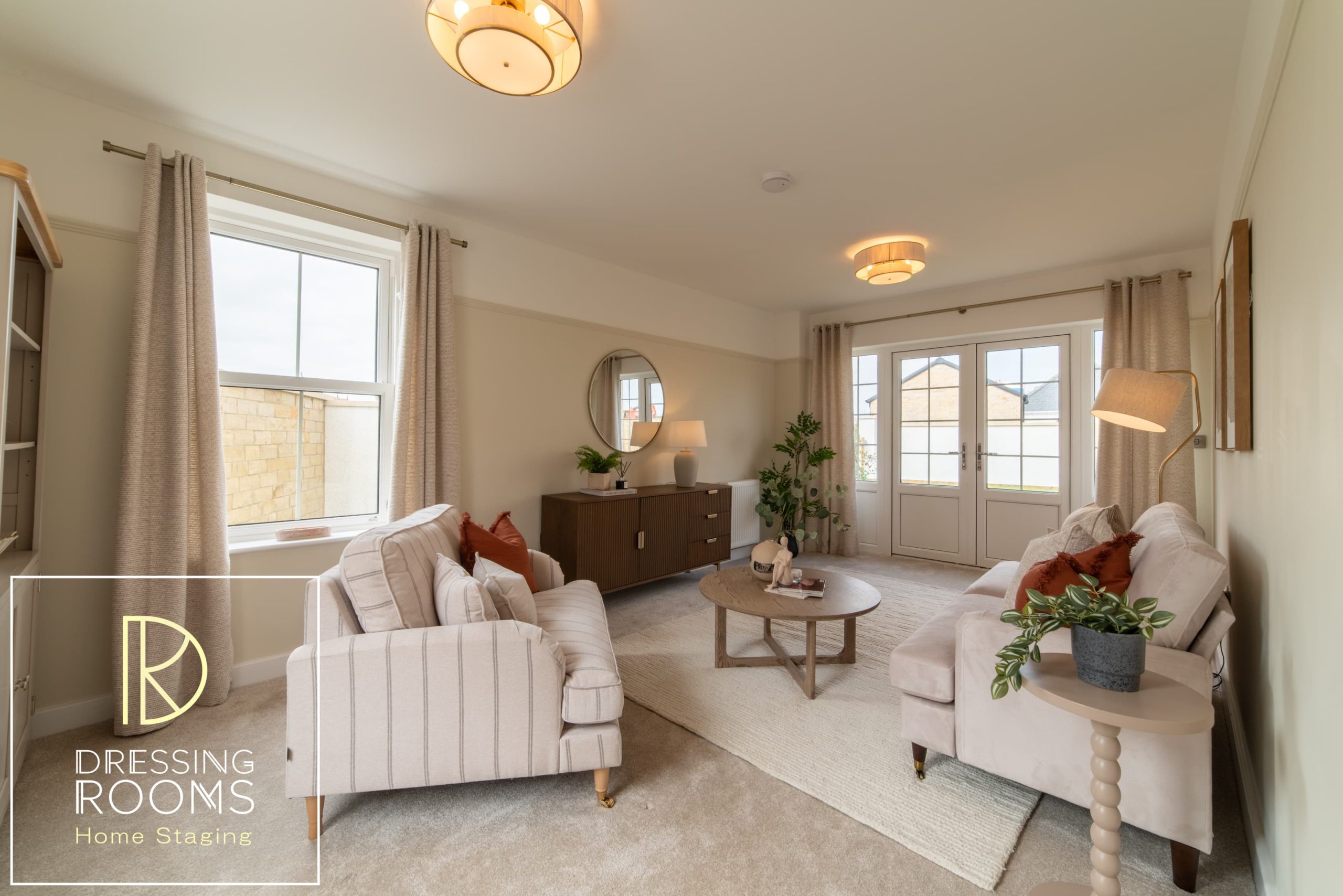
We put this into practice when designing the show home for Wharfedale Homes at Spa Gardens in Gainford. Inspired by the surrounding countryside, we combined greens, creams and natural textures to create a home that felt aspirational, welcoming and suited to its setting.
Use texture rather than too much colour
One of our favourite show home design tricks is to use texture to create interest rather than relying heavily on colour.
This is particularly important when you’re trying to appeal to a broad audience.
Strong colours can be divisive. One buyer might love a deep blue bedroom, while another immediately starts thinking about how much it will cost to paint over.
Texture, on the other hand, can make a room feel interesting and luxurious without making it feel overly personalised.
Think:
• Bouclé and linen fabrics
• Rugs
• Layered cushions
• Natural wood
• Woven baskets
• Ribbed or fluted details
• Textured wall finishes
• Curtains and voiles
• Plants and greenery
• Interesting lighting
The result can still feel characterful and high-end, but it is much easier for a wide range of buyers to imagine themselves living there.
You can see how we brought these elements together in our Gainford show home case study, where natural textures and a soft colour palette helped create that country feel with a modern twist.
Don’t underestimate lighting
Lighting is one of the most important elements of a show home – and it is something that can make a huge difference without necessarily requiring a huge budget.
Good lighting can completely change how a room feels.
Rather than relying solely on standard ceiling spots or a single pendant, think about creating layers of light throughout the property.
For example, you could use:
• Wall lights
• Alcove lighting
• Pendant lights over kitchen islands
• Under-cupboard lighting
• Bedside wall lights
• Floor and table lamps
• Decorative pendants
• Standard ceiling spots
The beauty of getting your lighting right at the beginning of a development is that it can be relatively cost-effective to incorporate.
It is much easier to plan additional lighting points during the design and build stage than to try to go back and add them in later.
And don’t forget that lighting is also incredibly important for photography. A beautifully lit show home will generally photograph far better than one relying entirely on harsh overhead lighting.
Curtains: don’t cut corners
Curtains are another detail that can make or break a show home.
For a single property flip, we wouldn’t necessarily recommend spending heavily on bespoke curtains. But for a show home, where you’re trying to create a premium, finished space, quality window dressings can absolutely be worth the investment.
Cheap curtains tend to look cheap.
They’re often too long, too short, too stiff or simply don’t hang properly.
And when the rest of the property has been carefully designed, poor-quality curtains can stand out for all the wrong reasons.
If budget is tight, voile curtains can be a great alternative.
How to Design a Show Home – and finally, remember: you’re selling a lifestyle
Ultimately, the purpose of a show home isn’t simply to show buyers what a property looks like.
It’s to show them what their life could look like.
The dining table isn’t just a dining table – it’s Sunday lunch with the family.
The sofa isn’t just furniture – it’s where they can imagine relaxing after work.
The home office demonstrates how they could work from home.
The children’s bedroom helps a family picture their children growing up there.
That’s the emotional side of show home design – and it’s incredibly powerful.
The best show homes are often the ones where buyers walk through the door and think:
“This is beautiful… and I could actually live here.”
Planning a show home for your development? We help with everything from paint colours and fixtures to furniture and the finishing touches. Get in touch to discuss your show home and how we can help it appeal to your target buyers.

| Location: Branwell House, Park Lane, Keighley. | |
| Email: hello@dressingroomshomestaging.co.uk | |
| or Call Now 01535 509033 to get started! |


